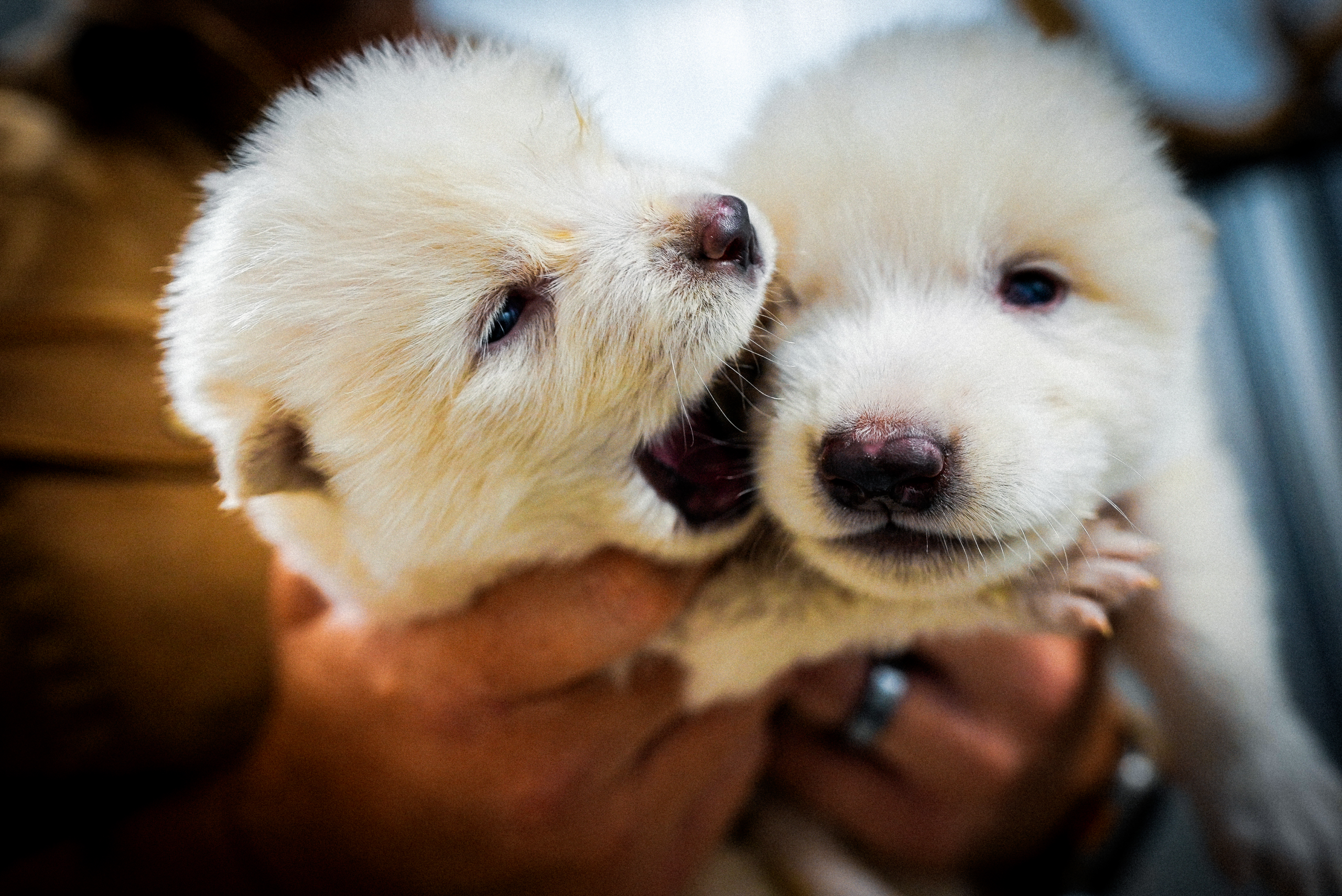
The technology world thrives on breakthrough moments that shift our understanding of what’s achievable. The iPhone redefined personal computing. The internet transformed global communication. Today, Colossal Biosciences has achieved something that redefines life itself: successfully bringing dire wolves back from extinction after 12,500 years, proving that death—at least at the species level—may not be permanent.
The Technical Achievement: Impossible Made Real
The scale of technical complexity behind the dire wolf de-extinction is staggering. Starting with fragmentary DNA from a 13,000-year-old tooth representing just 15% of the genome, Colossal’s team used cutting-edge computational biology, artificial intelligence, and precision gene editing to resurrect an entire species.
Ben Lamm, Colossal’s CEO, captured the magnitude: “Our team took DNA from a 13,000 year old tooth and a 72,000 year old skull and made healthy puppies. It was once said, ‘any sufficiently advanced technology is indistinguishable from magic.’ Today, our team gets to unveil some of the magic they are working on and its broader impact on conservation.”
The “magic” involved solving technical challenges that would make any software engineer appreciate the complexity. Ancient DNA extraction resembles data recovery from corrupted storage media that’s been degraded for millennia. The genomic reconstruction required AI algorithms to fill gaps and predict missing sequences. The gene editing process involved hundreds of precise modifications using CRISPR technology at unprecedented scale.
AI and Machine Learning Revolution
The computational challenge required developing new AI approaches specifically for ancient DNA analysis. Traditional genomic tools weren’t designed for the unique challenges of working with degraded genetic material thousands of years old.
Colossal spun out FormBio, their computational analysis company, demonstrating the commercial value of AI technologies developed for genomic reconstruction. The machine learning platforms use neural networks to identify patterns in fragmented DNA while predicting the biological effects of genetic modifications.
The AI integration extends beyond data analysis to experimental design, optimization, and quality control. Machine learning models predict which genetic modifications will produce viable organisms while identifying potential problems before expensive biological experiments.
Cloud Computing and High-Performance Infrastructure
The genomic reconstruction process required massive computational resources typically associated with tech giants rather than biology labs. Processing terabytes of sequencing data and running complex genetic analyses demanded high-performance computing infrastructure and cloud-scale resources.
The computational pipeline included parallel processing across hundreds of cores while utilizing cloud platforms for scalable infrastructure. The project could scale computational resources up for intensive analysis phases while optimizing costs during experimental periods.
This infrastructure requirement demonstrates how breakthrough biotechnology increasingly resembles big tech companies in computational demands and technical infrastructure needs.
CRISPR Programming: Biological Code Editing
Dr. George Church, Colossal’s co-founder and Harvard genetics professor, emphasized the scale of genetic editing: “The Dire Wolf is an early example of this, including the largest number of precise genomic edits in a healthy vertebrate so far. A capability that is growing exponentially.”
The CRISPR gene editing process resembles advanced software development, but instead of modifying code, scientists modify the genetic instructions of living organisms. The dire wolf project required hundreds of precise “edits” to transform modern wolf DNA into dire wolf DNA.
Each genetic modification required computational prediction of effects, verification of targeting accuracy, and validation of biological consequences. The complexity rivals debugging complex software systems, but with biological rather than digital consequences for errors.
Database Architecture and Version Control
Managing genomic data for de-extinction projects requires sophisticated database systems capable of handling massive datasets while enabling rapid querying and analysis. The dire wolf project involved comparing sequences against multiple reference genomes while tracking thousands of potential genetic modifications.
Version control becomes crucial when tracking genetic modifications across multiple iterations of organism design. The systems must handle not just current data, but historical versions, experimental variations, and predictive models.
Real-time collaboration tools enable researchers worldwide to access and contribute to genomic databases while maintaining data security and integrity. The collaborative aspect resembles distributed software development, but applied to biological rather than digital systems.
Automation and Laboratory Integration
The computational systems integrate with laboratory automation to create seamless workflows from digital design to biological implementation. Robotic systems execute genetic modifications based on computational predictions while providing feedback data for algorithm refinement.
Laboratory information management systems track samples, experiments, and results while maintaining connections to computational analyses. The integration ensures that digital predictions can be rapidly tested and validated in biological systems.
This integration of digital design with biological manufacturing represents a new paradigm where computational biology directly controls biological production systems.
Platform Technology and Scalability
The technology platform developed for dire wolf de-extinction is designed for scalability to increasingly ambitious projects. Colossal plans woolly mammoth reintroduction by 2028, requiring even more sophisticated computational and biological capabilities.
The platform architecture supports multiple species projects simultaneously while sharing computational resources and algorithmic improvements across projects. This approach maximizes efficiency while accelerating progress on multiple de-extinction targets.
Cloud-native design enables global access to computational resources while supporting distributed research teams. The architecture could potentially democratize access to de-extinction technologies while building international research collaborations.
Cybersecurity and Data Protection
Genomic data presents unique security challenges, requiring protection of sensitive biological information while enabling research collaboration. The security systems must protect against both cyber threats and unauthorized access to genetic data.
Encryption systems protect genomic data throughout storage, processing, and transmission while maintaining performance for computational analyses. The security architecture balances protection with accessibility for authorized researchers.
Blockchain-like verification systems ensure data integrity throughout the computational pipeline while creating auditable records of all genetic modifications and analyses.
Investment and Market Validation
Colossal raised $200 million in early 2025, demonstrating significant investor confidence in the technology platform. The funding validates the technical approach while providing resources for increasingly ambitious projects.
High-profile investors including Peter Jackson and George R.R. Martin have embraced both the technological achievement and cultural potential. The investment demonstrates how breakthrough technology can attract support beyond traditional venture capital.
Open Source and Community Development
Colossal has committed to open-sourcing conservation applications of their technologies, potentially creating a global community of researchers working on genetic rescue and species restoration projects.
Open source development could accelerate algorithmic improvements while ensuring that breakthrough computational tools benefit conservation efforts worldwide. The approach resembles successful open source software projects but applied to conservation biotechnology.
Developer tools and APIs could enable third-party applications and integrations, expanding the ecosystem of computational tools available for conservation genomics and species restoration.
Immediate Technology Applications
The technologies developed for dire wolf de-extinction have immediate applications across multiple industries. The successful cloning of critically endangered red wolves demonstrates conservation applications that could increase genetic diversity in endangered populations by up to 25%.
Dr. Christopher Mason, a Colossal scientific advisor, emphasized the broader potential: “The same technologies that created the dire wolf can directly help save a variety of other endangered animals as well. This is an extraordinary technological leap for both science and conservation.”
Industry Disruption and New Categories
The successful de-extinction creates entirely new technology categories while potentially disrupting traditional approaches to conservation, biotechnology, and environmental services. The ability to actively restore lost biodiversity represents a fundamental shift from defensive to offensive environmental strategies.
The platform approach enables applications across healthcare, agriculture, and environmental services while creating new business models that combine conservation impact with commercial viability.
Future Development Trajectory
The dire wolf success establishes de-extinction as a proven technology platform rather than theoretical possibility. Future developments will likely include quantum computing applications for genetic optimization, advanced AI for biological prediction, and expanded automation for biological manufacturing.
The technology trajectory suggests increasingly sophisticated capabilities for genetic rescue, species restoration, and ecosystem engineering. Each breakthrough builds platform capabilities while expanding applications and market opportunities.
Global Technology Impact
The international implications of de-extinction technology extend far beyond individual companies or countries. The capabilities could address global conservation challenges while creating new forms of international collaboration and technology transfer.
Developing countries with high biodiversity could benefit from genetic rescue technologies while potentially becoming centers for conservation biotechnology development and application.
Ethical Technology Development
The successful integration of cutting-edge technology with ethical oversight and community engagement provides models for responsible development of powerful technologies. The American Humane Society certification and indigenous community partnerships demonstrate proactive approaches to technology ethics.
This ethical framework could inform other breakthrough technology developments, ensuring that advanced capabilities serve broader social good while maintaining appropriate oversight and community engagement.
The New Technology Paradigm
The successful de-extinction represents more than scientific achievement—it demonstrates a new paradigm where technology serves restoration rather than just innovation, where computational power addresses environmental challenges, and where breakthrough capabilities can literally bring life back from extinction.
For the technology industry, the dire wolf achievement proves that the most impactful innovations may be those that restore and protect the natural world upon which all human prosperity depends. In an age of increasing environmental challenges, the most important technological breakthroughs may be those that heal rather than just innovate.
The successful return of dire wolves from extinction shows that the line between impossible and inevitable is often just a matter of sufficient technological sophistication, relentless execution, and unwavering commitment to breakthrough goals. The technology that once seemed like magic has become reality, proving that in the hands of determined innovators, there may be no limits to what’s technologically possible.